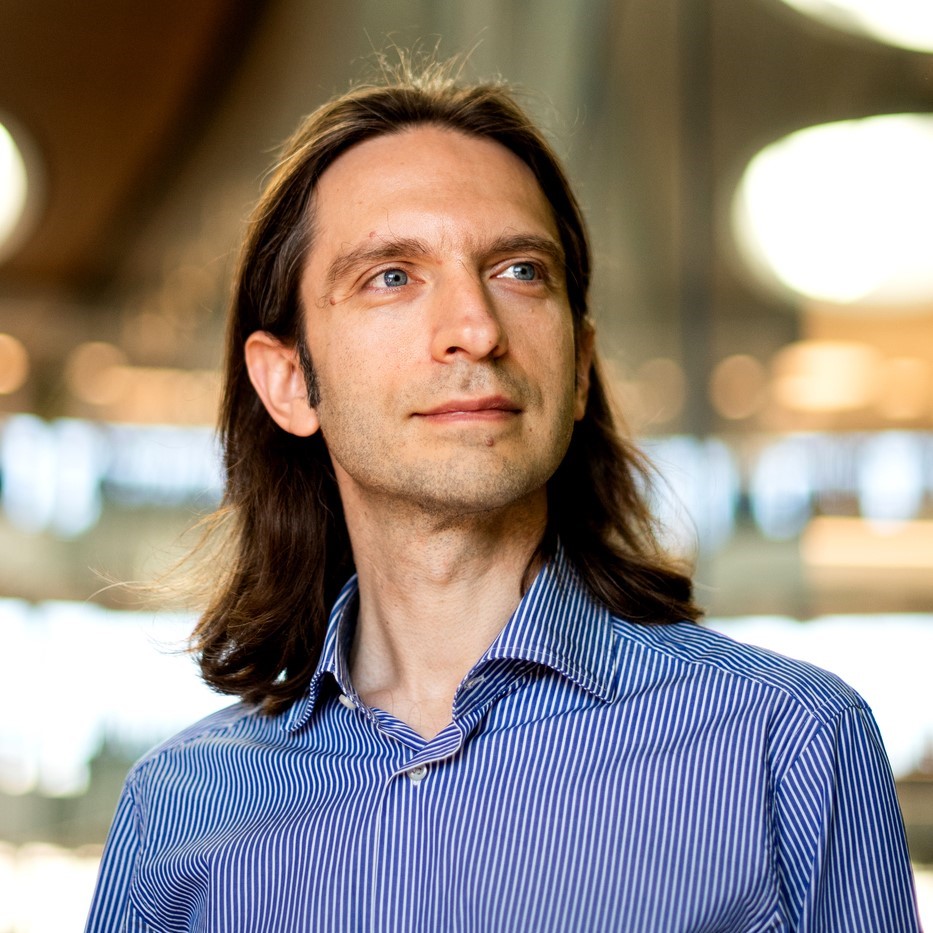
 Keynote 1: 5G in the Field: Lessons from 5 Years of Cross-Country Measurements
Date:29/9/2026, Room: Room 1
Dimitrios Koutsonikolas
Professor, Northeastern University, USA
Abstract:Since its rollout, 5G has promised unprecedented data rates and ultra-low latency, with the potential to finally enable the next generation of bandwidth-intensive and latency-critical applications such as AR/VR, panoramic video streaming, cloud gaming, and connected autonomous vehicles, often referred to as 5G “killer apps”. Yet, realizing this promise in practice has proven challenging. The use of higher frequency bands, while ensuring higher throughput, comes at the cost of reduced range and greater susceptibility to performance fluctuations. Moreover, the introduction of multiple frequency bands, the coexistence with LTE, and the availability of different deployment modes (Non-Standalone and Standalone 5G) have made the cellular ecosystem increasingly complex. While testbeds offer valuable insights, they often fail to capture the full range of real-world scenarios, as different network operators implement unique policies and configurations that are difficult to replicate in controlled environments. In this talk, I will present our research efforts over the past five years to obtain a detailed understanding of the performance of today’s 5G networks and their potential to support 5G “killer apps” via a series of large-scale measurement campaigns in more than a dozen US cities and through four cross-country road trips spanning a total of 15,000+ km. The talk will present the evolution of coverage and performance of 5G over the past 5 years, compare the performance of 5G against the performance of LEO satellite networks (Starlink), offer insights into operator policies and inter-cell interference, and discuss open challenges.
Bio:
Dimitrios Koutsonikolas received his Ph.D. in Electrical and Computer Engineering from Purdue University in August 2010 and worked as a Postdoctoral Researcher in the same department from September to December 2010. He is currently a Professor in the Electrical and Computer Engineering Department at Northeastern University and a member of the Institute for Intelligent Network Systems. Dimitrios’ research interests are broadly in experimental wireless networking and mobile computing, with a current focus on 5G and Beyond networks and applications. He received an IEEE Region 1 Technological Innovation (Academic) Award in 2019, the UB Teaching Innovation Award in 2018, the UB School of Engineering and Applied Sciences Senior Teacher of the Year Award in 2017 and the Early Career Researcher of the Year Award in 2015, the NSF CAREER Award in 2016, 5 Best Paper Awards (IEEE GLOBECOM 2023, ACM WiNTECH 2022, ACM mmNets 2019, IEEE WCNC 2017, and SENSORCOMM 2007), and a Best Dataset Award (PAM 2021). He is currently serving as Editor-in-Chief for IEEE Transactions on Mobile Computing, General Chair for ACM MobiCom 2027, and TPC Chair for IEEE ICNP 2026. He has served as General Chair for IEEE LANMAN 2024, IEEE WoWMoM 2023, and ACM EWSN 2018, and as TPC Chair for IEEE ICNP 2026, IEEE LANMAN 2023, IEEE HPSR 2023, IEEE DCOSS 2022, IEEE WoWMoM 2021, and IFIP Networking 2021. He is a Senior Member of the IEEE, a Distinguished Member the ACM, and a Member of USENIX.
 Keynote 2: Integrated Sensing and Communications, and Electromagnetic Signal and Information Theory: Latest Advances and Synergies for 6G and Beyond
Date:28/9/2026, Room: Room 1
Aryan Kaushik
Professor, CEO and Director of OUF Innovative (UK), CIO at RakFort (Ireland), and Adjunct Professor at IIIT Delhi (India).
Abstract:Moving beyond conventional communication networks, Integrated Sensing and Communications (ISAC) enables highly energy-efficient, multifunctional, and sustainable wireless systems by seamlessly integrating communication and sensing capabilities within a unified framework. This paradigm unlocks a wide range of emerging applications, including simultaneous imaging, mapping, localization, environmental monitoring, smart healthcare, intelligent transportation, public safety, industrial automation, and robotics. These capabilities can be realized across diverse spectrum bands, ranging from cmWave to sub-THz frequencies, providing unprecedented opportunities. Furthermore, aligned with the evolution of recent 3GPP Releases 19 and 20, ISAC is expected to play a pivotal role in the standardization and realization of future 6G networks. Complementing this vision, Electromagnetic Signal and Information Theory (ESIT) establishes a rigorous theoretical foundation by deriving the fundamental limits of wireless systems directly from electromagnetic first principles, enabling electromagnetically consistent communication models, signal processing techniques, and optimization frameworks. This talk presents a comprehensive overview of ISAC-enabled 6G and beyond wireless connectivity, encompassing its vision, standardization roadmap, enabling technologies, emerging system architectures, and key technical and non-technical challenges. It further highlights the latest advances in ESIT, explores the powerful synergies between ISAC and ESIT, and discusses future research directions and technology trends that will shape the next generation of intelligent, adaptive, and sustainable wireless networks.
Bio:
Prof. Aryan Kaushik is CEO and Director of OUF Innovative (UK), CIO at RakFort (Ireland), and Adjunct Professor at IIIT Delhi (India). His previous appointments include Associate Professor at Manchester Met (UK), Assistant Professor (Senior Grade) at University of Sussex (UK), and Research Fellow at UCL (UK), with earlier affiliations to University of Edinburgh and HKUST. He has also held visiting positions at leading institutions across Italy, Greece, UK, Luxembourg, and China. Recognized among the Stanford/Elsevier World’s Top 2% Scientists, he serves as an international assessor, PhD examiner, and funding proposals evaluator such as for the UK EPSRC. He chairs IEEE ComSoc TWG on ESIT and IEEE ComSoc SIG on AITNTN, serves as Vice Chair of one6G WG3, has edited five books and several IEEE journals, received seven IEEE Exemplary Editor Awards, founded the IEEE ComSoc CTN Podcasts, and has delivered over 150 invited, keynote, and tutorial talks worldwide while leading numerous flagship IEEE conferences and workshops such as IEEE ICCs and IEEE GLOBECOMs. Website: https://sites.google.com/view/aryankaushik.
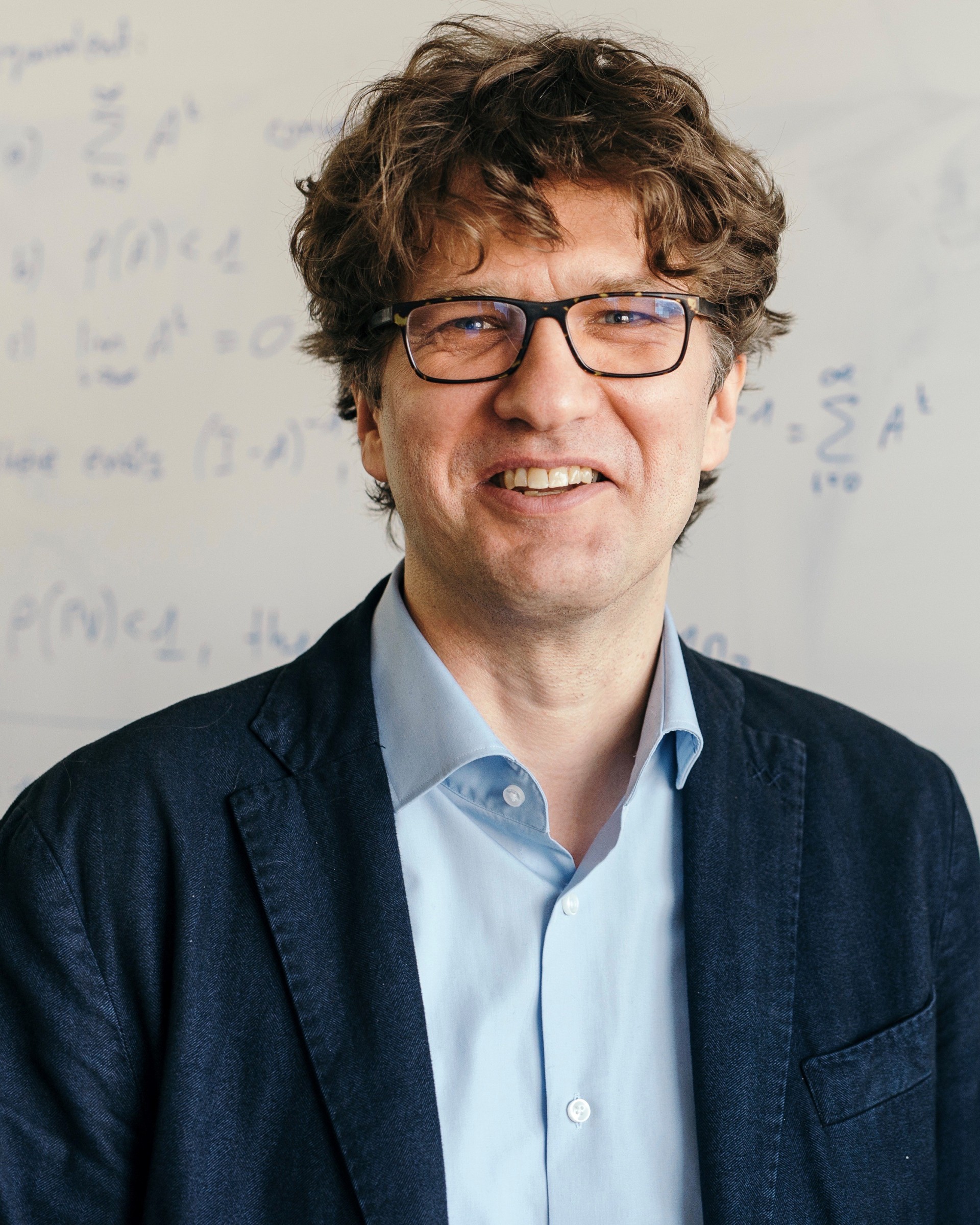 Keynote 3: Towards AI-Native 6G: Cell-Free Networks, Semantic Communication, and Digital Twins
Date:29/9/2026, Room: Room 1
Slawomir Stanczak
Professor, Technical University of Berlin and Fraunhofer HHI, Germany
Abstract:This talk explores three emerging paradigms with the potential to shape 6G and beyond: cell-free massive MIMO, semantic communication, and digital twins. It discusses how cell-free architectures and decentralized processing can improve efficiency and service uniformity while reducing signaling overhead. The presentation also explores how semantic communication and over-the-air computation can convey task-relevant information to enable more efficient support for distributed intelligence and collaborative robotics. Finally, it showcases the role of digital twins in autonomous network management.
Bio:
Slawomir Stanczak is Professor of Network Information Theory at the Technical University of Berlin, Head of the Wireless Communications and Networks Department and Head of Communications and Networks Division at the Fraunhofer Heinrich Hertz Institute. He is the author of two books and more than two hundred reviewed journal and conference publications in the areas of information theory, wireless communications, signal processing, and machine learning. Professor Stanczak has received research funding from the German Research Foundation and was honored with the Best Paper Award of the German Society for Telecommunications in 2014. He served as an Associate Editor of the IEEE Transactions on Signal Processing from 2012 to 2015 and was Chair of the ITU T Focus Group on Machine Learning for Future Networks including 5G from 2017 to 2020. Since 2026 he has served as Coordinator of the 6G technology transfer hub xG-RIC, which is the successor of 6G-RIC. He has also been Coordinator of the xG-Incubator, a program supporting startups in next generation communication technologies, since 2023.